A Professional's Take on the New Rog Swift Oled Pg32Ucdp
Introduction
The Rog Swift Oled Pg32Ucdp positions itself as a premium 32-inch display that blends the signature deep blacks and contrast of OLED with features targeted at both creators and gamers. As monitors continue to converge toward hybrid use—professional content creation by day, competitive play by night—buyers must weigh image fidelity, motion performance, longevity, and connectivity. This article provides a measured, practical assessment of the Rog Swift Oled Pg32Ucdp from a professional standpoint: what it delivers in real-world scenarios, where it may fall short, and how it stacks up against common alternatives.
Detailed Product Review and Analysis
Design and Ergonomics
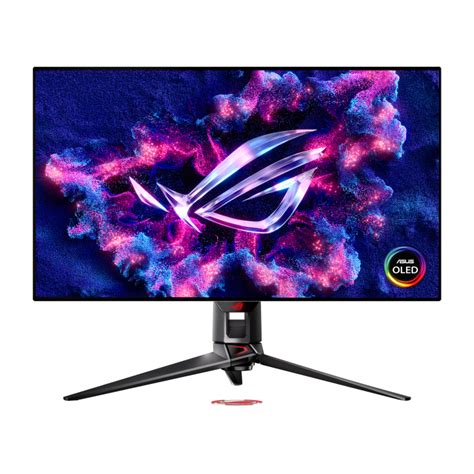
The Rog Swift Oled Pg32Ucdp adopts a refined industrial aesthetic consistent with contemporary high-end displays. The 32-inch footprint is well suited to desktop productivity and creative work, providing ample screen real estate for timeline-based editing or multi-window workflows without forcing users to pan excessively. The monitor typically ships with a robust stand offering height, tilt, and swivel adjustments; some configurations also allow for pivot or VESA mounting, which is important for workflows that require portrait mode or multi-monitor arrays.
Panel and Image Quality
At the core of the Pg32Ucdp is an OLED panel, and the characteristic strengths of OLED are immediately evident: extraordinarily deep blacks, exceptional contrast, and vibrant color rendition. For photographers, video editors, and designers who depend on accurate shadow detail and contrast separation, the monitor delivers a level of visual clarity that backlit LCDs often struggle to match. Gradation in highlights and shadow inkiness are especially beneficial when working on high-dynamic-range (HDR) content, where local contrast and tone mapping decisions matter.
Color accuracy out of the box tends to be strong with OLED technology; however, professional color-critical work benefits from profiling. The monitor supports wide color gamuts, making it suitable for DCI-P3 or extended-sRGB work stages. For absolute color grading or print-proofing, a hardware calibration device and a professional workflow remain recommended.
Motion and Gaming Performance
OLED’s pixel-level illumination provides very low pixel response times compared with conventional LCDs, which translates to clean motion with minimal trailing—an appealing trait for fast-paced gaming and interactive content. The Pg32Ucdp is engineered to serve gamers as well as creatives, with adaptive sync technologies supported to reduce tearing and stutter across variable frame rates. The combination of low-latency panel response and variable refresh support makes it suitable for both cinematic single-player titles and competitive play where responsiveness matters.
HDR Handling and Peak Brightness
One area where OLEDs and traditional LED-backlit monitors diverge is peak brightness. OLED panels excel at contrast due to pixel-level dimming but typically cannot reach the sustained peak luminance levels of large full-array local-dimming LED or mini-LED displays. In practical terms, this means that while HDR content benefits from superb contrast and black-level detail on the Pg32Ucdp, extremely bright specular highlights will appear differently than on a very bright mini-LED display. For HDR grading where maximum nit levels are a strict requirement, professionals should consider the monitor’s HDR implementation as part of their decision-making rather than assuming a uniform HDR experience across panel types.
Burn-in Considerations and Long-Term Use
Burn-in and image retention are real considerations with OLED technology. The manufacturer typically implements software-level mitigations—pixel shifting, automatic dimming of static UI elements, and screen savers—to reduce the risk, and warranty terms may address certain retention scenarios. For buyers who rely on static interfaces for long durations (e.g., software with persistent toolbars or GUI elements), disciplined usage patterns are recommended: vary content, use dark-mode interfaces where appropriate, employ automated screen-sleep settings, and consider an interval-based pixel-refresher routine if provided by the monitor.
Connectivity and Features
Modern professional workflows frequently require multiple high-bandwidth inputs. The Pg32Ucdp provides a selection of contemporary ports—high-bandwidth HDMI, DisplayPort, USB hubs, and sometimes USB-C power delivery—so it integrates well with laptops, desktops, and consoles. On-screen display (OSD) controls, factory color modes, and presets for gaming or creative tasks are useful touches. Additional features commonly valued in this segment include built-in KVM switching for multi-system setups and hardware-level color calibration support.
Shop the latest Electronics picks on Amazon.
See Deals →Real-World Use Cases
Content creators will appreciate the monitor’s superior contrast and accurate color for photo editing, color grading, and video playback. The 32-inch size balances workspace and pixel density to maintain readable UI elements while still allowing fine detail inspection.
Game streamers and broadcasters benefit from the panel’s motion clarity and vivid colors. When paired with appropriate capture hardware, the monitor facilitates both production and enjoyment of games with cinematic fidelity.
Professionals working in mixed environments—software development, financial analysis, CAD, and data visualization—will find the Pg32Ucdp’s contrast and native resolution advantageous for readability and multi-pane layouts. However, those whose workflows require long static displays (for instance, radar operators or control-room dashboards) should weigh OLED’s burn-in considerations more heavily.
Pros & Cons
- Pros:
- Exceptional contrast and true blacks thanks to OLED panel technology
- Excellent color reproduction suitable for wide-gamut workflows
- Low pixel response yields clean motion and reduced trailing
- Strong integration of modern connectivity and adaptive-sync features
- 32-inch size provides a good balance between screen real estate and desk footprint
- Cons:
- Potential for burn-in with prolonged static content—mitigation and careful use required
- Peak brightness for HDR highlights may be lower than top-tier mini-LED options
- Premium pricing relative to comparable LCD/mini-LED displays
- Color-critical workflows still benefit from external calibration equipment
How the Rog Swift Oled Pg32Ucdp Compares
The following table provides a practical comparison between the Rog Swift Oled Pg32Ucdp and two common alternative classes buyers consider in this segment: a high-refresh 4K IPS monitor and a mini-LED HDR 32-inch monitor. This side-by-side view highlights strengths and trade-offs in typical buyer language.
| Feature | Rog Swift Oled Pg32Ucdp | Typical 4K IPS 144Hz | Mini-LED 32-inch (High HDR) |
|---|---|---|---|
| Panel Type | OLED (self-emissive) | IPS (backlit) | VA/IPS with mini-LED local dimming |
| Contrast / Blacks | Best — true blacks and infinite contrast feel | Good — limited by backlight | Excellent — strong local dimming but can show haloing |
| Motion / Response | Excellent — very low pixel response | Very good — depends on overdrive settings | Good — may show slower pixel transitions than OLED |
| HDR Highlight Brightness | Strong contrast but lower peak brightness versus mini-LED | Moderate — depends on backlight | Best — high peak luminance and strong local highlights |
| Burn-in Risk | Present — requires management and mitigations | Minimal — backlit LCDs not susceptible | Minimal — backlit LCDs not susceptible |
| Color Accuracy | Very good — wide gamut, strong out-of-the-box performance | Good to very good — many provide factory calibration | Very good — often targeted at content creators |
| Best For | Mixed creative/gaming users who prioritize contrast and motion clarity | Competitive gamers who want high refresh with 4K or high-FPS at lower resolutions | HDR-first workflows where maximum highlight brightness and punch are required |
Buying Guide: What to Consider Before Purchasing
1. Define Primary Use
Buyers should start by clarifying how the monitor will be used most of the time. If the primary need is professional color work and video editing with dark-room grading, the Pg32Ucdp’s deep blacks and color rendition are advantageous. For competitors focused solely on the highest sustained HDR peak brightness, a mini-LED display might be a better fit. Gamers seeking the absolute highest sustained luminance for HDR highlights should weigh mini-LED alternatives, while competitive players who prioritize response time and low motion blur may prefer OLED or top-tier high-refresh IPS models.
2. Consider Burn-in Risk and Usage Patterns
OLED equity comes with intrinsic caveats. If workflows include static interface elements—toolbars, HUDs, or persistent windows—plan mitigations. Use dynamic UI themes, enable pixel-shift and screen-saver features, and avoid leaving the monitor on with the same static image for prolonged unattended periods. For mission-critical or 24/7-display usage, consider LCD alternatives.
3. Connectivity Needs
Check the port selection against current and future devices. Modern video sources often require high-bandwidth HDMI or DisplayPort for high-resolution/high-refresh operation. Laptops with USB-C and power delivery may benefit from a monitor that offers USB-C with display and power passthrough. For multi-PC desks, integrated KVM can simplify switching.
Looking for the best Electronics deals on Amazon?
View Offers →4. HDR Expectations
Understand what HDR expectations are realistic for the chosen panel type. If HDR workflows demand very high nit levels for spec compliance, mini-LED displays with high peak brightness and validated HDR certifications will be a better match. If the priority is contrast and black-level fidelity over extreme highlights, OLED delivers perceptually dramatic HDR even with lower peak numbers.
5. Calibration and Color Workflows
Even with strong factory settings, professionals should budget for a hardware colorimeter if absolute accuracy is required. Look for monitors that either ship factory-calibrated or support external calibration profiles. Verify whether the monitor supports 3D LUTs or hardware calibration workflows if those are part of the studio pipeline.
6. Warranty and Manufacturer Support
Warranty terms and manufacturer support for burn-in or image retention can materially affect the long-term value proposition. Review the warranty scope and any burn-in policies; some manufacturers offer more explicit coverage or extended replacement programs on OLED models.
7. Desk Size and Ergonomics
Ensure the monitor’s footprint, stand adjustments, and VESA compatibility fit the intended workspace. A 32-inch panel often benefits from a deeper desk or an adjustable arm to achieve an ergonomic viewing distance that reduces neck strain.
8. Budget and Total Cost of Ownership
OLED monitors typically command a premium. Consider the total cost of ownership: calibration tools, potential replacement considerations, and whether the display’s strengths align with the buyer’s workflow sufficiently to justify the price differential versus LCD or mini-LED options.
Conclusion
The Rog Swift Oled Pg32Ucdp is a compelling choice for professionals who need the visual advantages of OLED—deep blacks, striking contrast, and excellent motion clarity—combined with modern connectivity and gaming-friendly features. It excels in mixed-use scenarios: content creators who occasionally game, streamers who produce and play, and users who value immersive picture quality. The principal trade-offs are burn-in risk inherent to OLED and relatively lower peak brightness for spec-driven HDR workflows. Buyers should assess primary tasks, manage static-content habits, and plan for calibration to extract the monitor’s full potential. For those who prioritize contrast and motion performance over the maximum HDR peak numbers, the Pg32Ucdp represents a strong, thoughtful offering in the high-end display space.