Spec Battle: Agfaphoto Realimove Mc3X vs Thermal Master P3 Thermal Camera — Is It Worth Upgrading?
Introduction
Thermal imaging has moved from niche industrial tools into the hands of contractors, home inspectors, electricians, HVAC technicians, and curious hobbyists. When two models with similar positioning appear in the market — in this case the Agfaphoto Realimove Mc3X and the Thermal Master P3 — the decision to upgrade or switch can be less about headline specs and more about which differences matter in real-world use. This article compares both devices across performance, ergonomics, software, and value to answer the common buyer question: is it worth upgrading?
At a glance
Both models aim to serve customers who need reliable thermal imaging without the price and complexity of high-end industrial cameras. The Agfaphoto Realimove Mc3X presents itself as a compact, user-friendly option for mixed visual/thermal tasks. The Thermal Master P3 positions itself more as a prosumer/professional tool, with features geared toward inspection workflows and higher thermal performance. The rest of this article unpacks what those general positions mean for buyers, with concrete scenarios to help decide whether an upgrade is warranted.
Detailed product analysis
Agfaphoto Realimove Mc3X — what it brings to the table
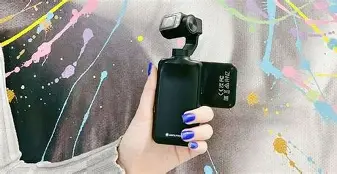
The Realimove Mc3X is typically pitched at users who want an intuitive device that handles both thermal and visible-light inspection tasks. For many buyers, the most attractive aspects are portability, ease-of-use, and a clean visual overlay between thermal and optical images. That makes it a common choice for quick roof, attic, or household inspections where identifying heat patterns or leaks quickly is more important than lab-grade measurement accuracy.
Key practical strengths commonly reported by users include a lightweight design, straightforward menus, and usable on-device controls so that basic diagnostics can be performed without a laptop. The presence of a visual camera to combine with thermal data (sometimes called image fusion or MSX-style overlay) helps inexperienced users interpret thermal images in context — especially when they are checking for loose wiring, missing insulation, or moisture intrusion.
Where it tends to show its limits is in professional measurement demands. Buyers who routinely require narrow temperature differentials, precise radiometric capture, or long-duration site logging may find the Mc3X falls short. The device is best understood as a practical, affordable scanner for non-specialists and light pros who prioritize speed and convenience.
Thermal Master P3 — what it brings to the table
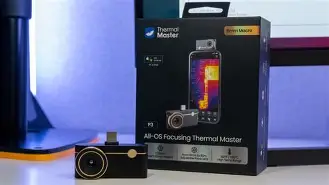
The Thermal Master P3 is commonly seen as a step up toward more demanding inspection workflows. Its design emphasis is on higher sensitivity, better thermal resolution, and software features that support reporting, annotation, and measured results. Professionals who document electrical hotspots, HVAC imbalances, or building envelope failures frequently choose cameras in this class because they reduce rework from ambiguous results and make deliverables (reports and images) more defensible.
The P3 usually targets users who need a tool that integrates with inspection software, offers more detailed radiometric outputs, and can capture nuances in temperature differences that matter for troubleshooting. Ergonomics and battery life are often optimized for fieldwork, and connectivity options (Wi‑Fi, Bluetooth, USB) support quick transfer and integration into workflows.
On the downside, the P3’s extra capability often comes with increased cost, a slightly steeper learning curve for software features, and a weight/size tradeoff compared with ultra-compact consumer models. For users who only need occasional spot checks, these differences may not justify the upgrade.
Pros & cons
Agfaphoto Realimove Mc3X
- Pros: Compact and lightweight; easy to use for beginners; intuitive visual/thermal overlay for context; fast startup and simple controls; usually better value for casual users.
- Cons: Limited measurement precision for professional diagnostics; fewer advanced software/reporting features; may have lower thermal sensitivity and resolution compared to prosumer models; shorter continuous runtime under heavy use.
Thermal Master P3
- Pros: Higher thermal sensitivity and resolution aimed at prosumer/professional use; more robust radiometric output and measurement tools; stronger software/reporting ecosystem; better suited for continuous inspection workflows and documentation.
- Cons: Higher cost; heavier or larger than compact consumer units; requires time to learn and to integrate into inspection/reporting processes; marginal benefits for casual users.
Side-by-side comparison
The table below summarizes the most relevant factors buyers look at when choosing between these two cameras. Exact numbers and feature availability vary by configuration and firmware version; this table focuses on the observable differences that affect real-world use.
| Feature | Agfaphoto Realimove Mc3X | Thermal Master P3 |
|---|---|---|
| Target user | Entry-level to light prosumers; homeowners and DIYers | Prosumer/professional inspectors, tradespeople, and technicians |
| Thermal performance | Balanced for quick scans; suitable for obvious hotspots | Higher sensitivity and finer temperature discrimination |
| Visual/thermal overlay | Integrated overlay for context and easier interpretation | Advanced overlay options, annotation, and measurement tools |
| Radiometric data | Basic radiometric capture on some models; limited logging | Full radiometric support; exportable for reports and analysis |
| Software & reporting | Simple on-device gallery and basic export | Robust PC/mobile software, templates, and reporting workflow |
| Ergonomics | Handy, pocketable; straightforward buttons | Field-optimized grips, longer battery life, and tripod support |
| Connectivity | Basic USB and possibly Wi‑Fi transfer | Comprehensive connectivity: Wi‑Fi, Bluetooth, USB, and cloud options |
| Price positioning | More affordable; better for occasional use | Higher initial cost but geared toward professional ROI |
| Best for | Home inspections, quick troubleshooting, hobbyists | Electrical and mechanical diagnostics, building surveys, professional reports |
Real-world use cases and buyer concerns
Buyers evaluating an upgrade often think in terms of use cases rather than raw specs. The most common scenarios include:
Looking for the best Cameras & Photography deals on Amazon?
Browse Now →- Homeowners and DIYers: Looking for a simple way to spot insulation gaps, blocked ducts, or hot water leaks. They prioritize affordability, ease-of-use, and clear images that clearly show problem areas.
- Building inspectors and contractors: Need repeatable results and documentation that can be included in reports. Accuracy, exportable radiometric data, and reporting tools are high priorities.
- Electricians and HVAC technicians: Require cameras that can resolve small temperature differences on panels, connections, or motors. Sensitivity (low NETD) and a usable field of view are critical.
- Outdoor enthusiasts and search & rescue volunteers: Value battery life, ruggedness, and portability. Thermal sensitivity is important for detecting people at range, but workflow tools are less important.
For each of these groups, the decision to upgrade depends on how often the camera is used, the consequences of missed detections, and whether better reporting or measurement precision produces tangible business value.
Is it worth upgrading? A practical decision framework
Instead of a one-size-fits-all answer, consider the following questions to determine whether upgrading from the Agfaphoto Realimove Mc3X to the Thermal Master P3 is justified:
- How often will the camera be used? Occasional, casual checks rarely justify a higher-priced prosumer model. Frequent, daily use with customer reporting favors the P3.
- Are precise temperature readings required? If the work requires measuring small differentials, documenting exact voltages and temperatures, or exporting radiometric files for analysis, the P3’s superior measurement tools matter.
- Is reporting and traceability important? Professionals who must deliver inspection reports or who rely on evidence for warranty work should prioritize devices with robust software and export formats.
- Does portability or weight matter more than features? If the smallest form factor and simplicity are top priorities, a compact model like the Mc3X is better aligned.
- What is the ROI? For contractors, the cost of an upgrade should be measured against reduced troubleshooting time, fewer callbacks, and the ability to win premium inspection work.
Buying guide — what to look for
When selecting between consumer and prosumer thermal cameras, buyers should evaluate the following concrete attributes. These factors determine whether a camera will be useful day-to-day, not just how its spec sheet looks.
1. Thermal resolution and sensitivity
Resolution determines how much detail the camera captures; sensitivity (often expressed as NETD) defines how small a temperature difference it can detect. For electrical and motor diagnostics, prioritize higher sensitivity. For simple leak detection, modest sensitivity is usually sufficient.
2. Radiometric capability
True radiometric capture lets users extract temperatures pixel-by-pixel and export data for reports. If inspections must be defensible or you need to hand over raw data, choose a radiometric camera.
3. Visual/thermal fusion and field of view
A visual camera overlay helps orient thermal images. The field of view matters for distance work — narrow FOVs are useful for detail at range; wide FOVs are better for room-sized scans.
4. Refresh rate and real-time usability
Higher refresh rates make it easier to pan and find hotspots without smearing. For moving inspections or scanning machinery, a higher refresh rate reduces missed issues.
5. Ergonomics and battery life
Fieldwork demands comfortable grips, easy menu navigation, and enough battery life to cover job schedules. Consider hot-swappable batteries or spares if long inspections are routine.
6. Software and reporting
Integrated reporting templates, measurement tools, and cloud connectivity save time. Check the vendor’s software for photo annotation, batch export, and compatibility with third-party inspection platforms.
7. Connectivity and file formats
Wi‑Fi, Bluetooth, and USB transfer help get images to a tablet or laptop rapidly. Verify the camera supports usable file formats (radiometric JPEG, CSV exports) that match the buyer’s workflow.
Shop the latest Cameras & Photography picks on Amazon.
Shop Amazon →8. Durability and warranty
Ruggedized housings, IP ratings, and warranty terms matter in rough jobsite environments. A camera used on construction sites should tolerate drops, dust, and occasional moisture.
9. After-sales support and firmware updates
Manufacturers that offer timely firmware updates and support channels reduce long-term headaches. Check user forums and reviews for real-world support experiences.
Practical examples: decision by scenario
Scenario A — Weekend DIYer discovering thermal imaging
A homeowner who wants to occasionally check for drafts, inspect attic insulation, or verify a heating issue is typically well served by the Agfaphoto Realimove Mc3X. It delivers quick, interpretable images without the learning curve or investment required by prosumer tools.
Scenario B — HVAC contractor performing pre- and post-work documentation
An HVAC technician who documents sensor readings and wants to provide clients a professional report should consider the Thermal Master P3. The extra accuracy and reporting features translate directly to reduced callbacks and clearer documentation.
Scenario C — Electrical inspector looking for hotspots in distribution panels
When tiny temperature differences on tight components can indicate looming failures, the higher sensitivity and finer spatial detail of the P3 are worth the upgrade. The ability to export radiometric data also helps substantiate findings to safety auditors.
Scenario D — Search & rescue volunteer team
Teams that need a light, fast camera for locating people at close to moderate ranges may find the Realimove Mc3X adequate. If night operations or longer-range detection are common, the Thermal Master P3’s greater sensitivity could be beneficial.
Tips for evaluating before buying
- Try before you buy: Borrow or demo both cameras on a representative job to compare images and software workflows.
- Inspect exported files: Confirm that the camera can export the formats and metadata needed for reporting.
- Consider the total cost of ownership: include software subscriptions, additional batteries, and case or tripod accessories.
- Check community feedback: user reviews and professional forums reveal how units perform over months of real-world use.
- Pay attention to calibration and accuracy: look for devices with calibration certificates or clear manufacturer accuracy specifications if measurements matter.
Conclusion
The choice between the Agfaphoto Realimove Mc3X and the Thermal Master P3 ultimately comes down to intended use and return on investment. The Realimove Mc3X is an excellent option for buyers who prioritize portability, simplicity, and affordability — it excels at quick scans, homeowner troubleshooting, and hobbyist tasks. The Thermal Master P3 is geared toward users who need higher sensitivity, stronger measurement tools, and a software ecosystem that supports professional reporting and repeatable workflows.
For occasional users and hobbyists, upgrading to the P3 is unlikely to provide measurable day-to-day benefits. For professionals whose decisions or invoices depend on accurate, documented thermal measurements, the P3’s advantages in sensitivity, radiometry, and software are frequently worth the extra cost. Evaluating a camera should always start with the actual tasks it will perform: match the tool to the job, verify exports and reporting options, and consider long-term productivity gains rather than headline specs alone.